The legal profession has long been associated with tradition, authority, and, for many centuries, an exclusively male perspective. For generations, the hallowed halls of justice were gated communities where women were not only discouraged from entering but were legally barred from practicing. However, the late 19th and early 20th centuries witnessed a seismic shift. A few courageous women decided to challenge the status quo, demanding that the law—a system meant to provide justice—should finally open its doors to the feminine voice.
To discuss the “first” feminine lawyer is to look at a global tapestry of pioneers. Because legal systems differ by country, several women hold the title of being the first in their respective nations. Their stories are not just about legal mastery; they are stories of endurance, civil rights, and the relentless pursuit of equality.
Arabella Mansfield: The American Pioneer
In the United States, the journey toward gender equality in the law reached a turning point in 1869 with Arabella Mansfield. Born Belle Aurelia Babb, she did not attend a traditional law school, as most were closed to women at the time. Instead, she studied as an apprentice in her brother’s law office in Iowa.
Despite a state law that restricted the bar exam to “white male characters,” Mansfield sat for the exam and passed with high honors. Challenging the restrictive wording of the statute, a courageous judge ruled that the “affirmative of the male” did not necessarily imply the “exclusion of the female.” In 1869, Arabella Mansfield became the first woman admitted to a state bar in the U.S. While she spent much of her career in academia and activism rather than the courtroom, her admission broke the seal, proving that a woman’s intellect was more than a match for the rigors of legal theory.
Sarmiza Bilcescu: The First Doctor of Laws
While Mansfield was making history in America, a young Romanian woman named Sarmiza Bilcescu was taking the European legal world by storm. In 1884, she enrolled at the University of Paris (the Sorbonne), a move that was met with shock by the faculty. Legend has it that the university doorman initially refused to let her in, stating that “science was made for men.”
Bilcescu was undeterred. She became the first woman in Europe to obtain a PhD in Law. Her thesis, titled “On the Legal Condition of the Mother,” was a groundbreaking exploration of the lack of rights for women within the family structure. In 1891, she was admitted to the Bucharest Bar. Although she eventually focused more on social work and feminist advocacy, she laid the intellectual foundation for the feminine legal identity in Europe, proving that women could not only practice law but could master its most complex academic depths.
Cornelia Sorabji: A Voice for the Voiceless
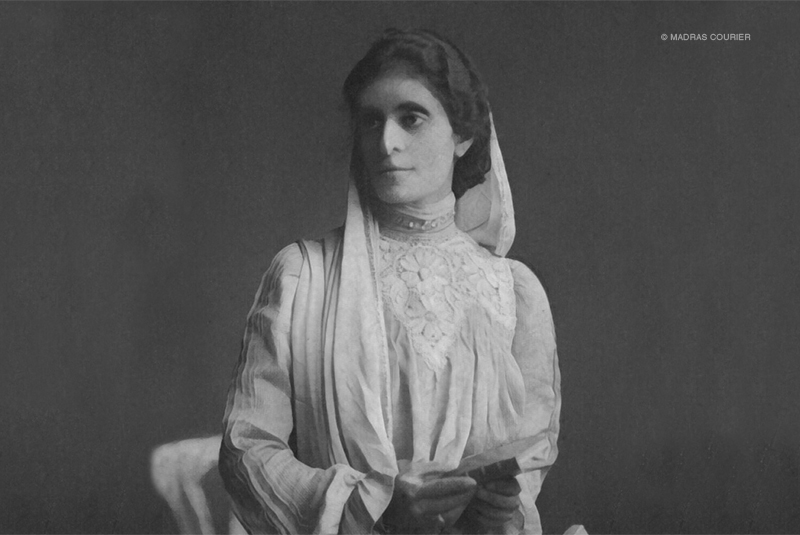
The story of feminine lawyers is incomplete without mentioning Cornelia Sorabji, the first woman to practice law in both India and Britain. Sorabji faced an uphill battle that was complicated by both gender and colonial dynamics. In 1892, she became the first woman to study law at Oxford University, though she was not granted a degree at the time because of her gender.
Upon returning to India, Sorabji found a unique and vital niche. She became a legal advisor to the “purdahnashins”—women who, according to social custom, lived in seclusion and were forbidden from communicating with men outside their families. Because the legal profession was entirely male, these women were often cheated out of their inheritances and properties with no way to seek legal counsel. Sorabji became their champion, navigating the complex world of British and Indian law to protect the vulnerable. She was eventually admitted to the bar after the law was changed in 1923, marking a victory for women’s rights across two continents.
The Challenges of the Feminine Perspective
What these pioneers faced was more than just a closed door; it was a psychological barrier. Opponents of women in the law argued that the “feminine temperament” was too emotional for the cold, logical world of the courtroom. They claimed that the presence of women would distract juries and undermine the dignity of the bench.
The first female lawyers had to perform a delicate balancing act. They had to be twice as prepared as their male colleagues to earn half the respect. They often had to choose between their careers and their personal lives, as many law firms and bar associations would not tolerate a married woman in their ranks. Yet, by entering the profession, they brought a necessary shift in focus. Issues like child labor, domestic violence, and women’s suffrage began to receive serious legal attention precisely because women were finally in the room to draft the arguments.
The Evolution of the Modern Female Attorney
Today, women make up nearly half of all law students in many parts of the world. The “feminine lawyer” is no longer a novelty; she is a senior partner, a Supreme Court justice, and a world leader. However, the path blazed by Mansfield, Bilcescu, and Sorabji remains relevant. They taught the world that the law is not a static set of rules owned by one gender, but a living instrument for justice that requires diverse perspectives to function correctly.
Modern lawyers owe their seats at the table to these 19th-century rebels who refused to accept that a woman’s place was anywhere other than where she chose to be. They proved that “feminine” and “lawyer” were not contradictory terms, but a powerful combination that could transform society.
Conclusion
The history of the first feminine lawyers is a testament to the power of the human spirit to overcome institutionalized prejudice. These women did not just learn the law; they changed the law so that others could follow in their footsteps. They faced ridicule, legal bans, and social isolation, yet they persisted because they understood that justice is blind to gender.
As we look at the diverse and vibrant legal profession of 2026, we see the fruit of their labor. The legacy of the first female lawyers is found in every courtroom where a woman stands up to speak, in every boardroom where a female counsel negotiates a deal, and in every piece of legislation that protects the rights of the marginalized. Their victory was not just for themselves, but for the very idea of justice itself.